


As mentioned, a company will usually have debit balances in its asset accounts. However, the details for contra accounts usually exist on the notes to the financial statements. Automating key contribution margin accounting tasks can help businesses track financial adjustments more effectively. Tools like Ramp integrate with accounting platforms to streamline reconciliations, categorize transactions, and generate real-time financial insights.
Understanding Key Basics and Examples of Accounts Receivable Terms
They are also helpful for keeping the books balanced and creating a clear trail of financial breadcrumbs for historical review and reporting. For instance, it is common to keep the purchase price of a piece of equipment as a historical cost in the debit asset account when it comes to fixed assets. It ensures that financial statements accurately reflect a company’s financial position. For instance, the “Accumulated Depreciation” contra account offsets the value of fixed assets like machinery or buildings, reflecting their reduced value over time due to wear and tear. A contra asset account is a type of account in accounting that has a natural credit balance and is used to decrease the balance of a related asset account. It contains negative balances that offset the balance in a paired asset account on a company’s balance sheet, revealing the net value of the asset.
The Contra Equity Account
- This process will give rise to a contra asset account which is the discount on notes receivables.
- Contra assets have a credit balance, offsetting the value of another asset, in contrast to conventional asset accounts, which have a debit balance.
- Companies account for product returns as they do for bad debts, leading us to the second contra-asset type.
- Instead of reporting the assets at their carrying amount directly, assets are reported at their historical costs and are reduced to book value by reporting the allowance for depreciation along with it.
- In summary, a Contra Account is an account used to reduce the value of a related account, with a balance that is opposite to the normal balance of that account.
- Instead of increasing assets or decreasing liabilities (as would be typical when spending cash), buying treasury stock reduces shareholders’ equity.
- Without them, you risk overstating equity, which can mislead stakeholders.
Not every sale results in full payment, and not all assets retain their value over time. Contra accounts allow businesses to account for unpaid invoices, depreciation, and discounts. Tracking these adjustments separately prevents overstating income or asset values, helping businesses anticipate financial risks and avoid sudden losses. When your company buys back its own shares, you record the cost in a contra equity account.
📆 Date: Aug 2-3, 2025🕛 Time: 8:30-11:30 AM EST📍 Venue: OnlineInstructor: Dheeraj Vaidya, CFA, FRM
As the vehicles depreciate, the contra asset account grows, providing a clear picture of the company’s investment in sustainable technology over time. It’s a testament to the principle that assets don’t just serve a business at a point in time but contribute value over their entire useful life. Common types include accumulated depreciation (contra asset), allowance for doubtful accounts, and sales returns (contra revenue). Regardless of that, allowance for receivables accounts will exist for all companies that have account receivable balances. This account helps companies present a more accurate accounts receivable balance on the financial statements.
- It is prepared when there is a reduction in the value of assets due to wear and tear continuous use or when we expect that a certain percentage of accounts receivable will not be received.
- Just remember that they carry an opposite balance than the other accounts in their account type.
- These accounts are used to reduce the value of the related asset directly on the balance sheet.
- Providing sales allowance represents discounts given to customers to entice them to keep products instead of returning them.
- The exact process can vary depending on the specific contra account and the accounting practices of the company.
What is a Contra Asset Account? Definition, Types, Example, and More
In the financial statements the asset a/c would be offset against the contra asset a/c to show the net balance. In bookkeeping terms, a contra asset account refers to an account which is offset against an asset account. The hottest retail item of today can be relegated to nostalgia channels on YouTube tomorrow. And when your business still has some of these outdated, unwanted, or unusable items in your inventory, you’ll want to offset the lost value of these assets in your general ledger and balance sheet. So rather than adjusting your Inventory account, you would update its contra account — Obsolete Inventory. As your business acquires new assets (e.g., machinery, office equipment, vehicles), you record the initial purchase value in your Fixed Asset account.

Allowance for Doubtful Accounts: What It Is and How to Estimate It

If you don’t track these contra asset example adjustments, your liabilities may look higher than they actually are. Accountants and financial teams handle these accounts to ensure compliance. When you issue bonds at a discount, you receive less money than the bond’s face value. Over time, the discount on bond payable balance is reclassified into bond interest expense. The issuer received less cash than the face amount of the bond, so the discount increases interest expense. Companies in the U.S. issued $1.3 trillion in bonds in 2023 alone, highlighting the importance of tracking these discounts properly.
- For stakeholders, looking at both accounts is also crucial in their decision-making process.
- Revenue is an income statement account, but it flows through to the equity section of retained earnings as well.
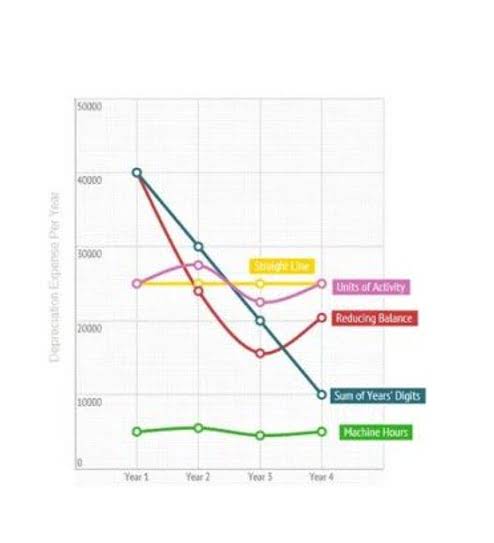
- They must ensure that the methods used—whether straight-line, declining balance, or units of production—are consistently applied and reviewed for relevance as asset usage patterns change.
- Accumulated depreciation is a contra-asset account that appears on the asset section of the balance sheet.
- To illustrate, consider a company with a fleet of vehicles that are crucial for its operations.
- For example, if a company reports $500,000 in gross sales but has $50,000 in returns and allowances, the net sales amount to $450,000.
- In this article, we’re going on a deep dive into what exactly a contra account is, how contra accounts work, why and how you would use contra accounts and more.
Meanwhile, tax professionals view contra asset accounts as essential in determining tax liabilities, as they directly impact the calculation of taxable income. Accumulated depreciation is a critical concept in accounting, representing the total amount of depreciation expense that has been recorded against a fixed asset since it was put into use. It is a contra asset account, meaning it has a credit balance and is used to offset the value of the asset it relates to on the balance sheet. Over time, as an asset is used, it loses value due to wear and tear, obsolescence, or age.
Businesses in every industry use contra revenue Bookkeeping for Consultants accounts to maintain financial accuracy. Accountants and financial teams manage these accounts to ensure compliance with GAAP (Generally Accepted Accounting Principles). Investors and auditors also review them to understand your company’s revenue trends and financial health.